Patriarchal Cathedral
The church dedicated to Saints Constantine and Helen was consecrated in 1658 by Patriarch Macarius of Antioch and the Entire East, together with Metropolitan Ștefan of Wallachia and the bishops of Râmnic and Buzău. It was painted for the first time in 1665, during the reign of the voivode Radu Leon (1664-1669). The same sovereign decided, by a royal chrysobull of 8 June, 1668, that the monastery should become a metropolitan residence.
In fact, Metropolitan Stephen had already established his residence here in 1661. In 1925, when the Romanian Orthodox Church was elevated to the rank of Patriarchate, the Metropolitan Residence became the Patriarchal Residence and the Metropolitan Cathedral became the Patriarchal Cathedral, provisionally, until a new, suitable cathedral was built.
In the course of time, the Cathedral and the Palace with its chapel were repaired, extensions and transformations were made, the most important works of which took place between 1792-1799 (initiated by the Metropolitan Pilaret II and Dositei Filitti), 1834-1839 (initiated by Metropolitan Gregory IV Dascălul and completed after his death), 1932-1935 (initiated by Patriarch Miron Cristea), 1960-1962 (initiated by Patriarch Justinian Marina, designer arch. Paul E. Miclescu), in 1989 and 2000-2001, with the blessing of the venerable Patriarch Theoctist, and in 2008, under the guidance of His Beatitude Patriarch Daniel.
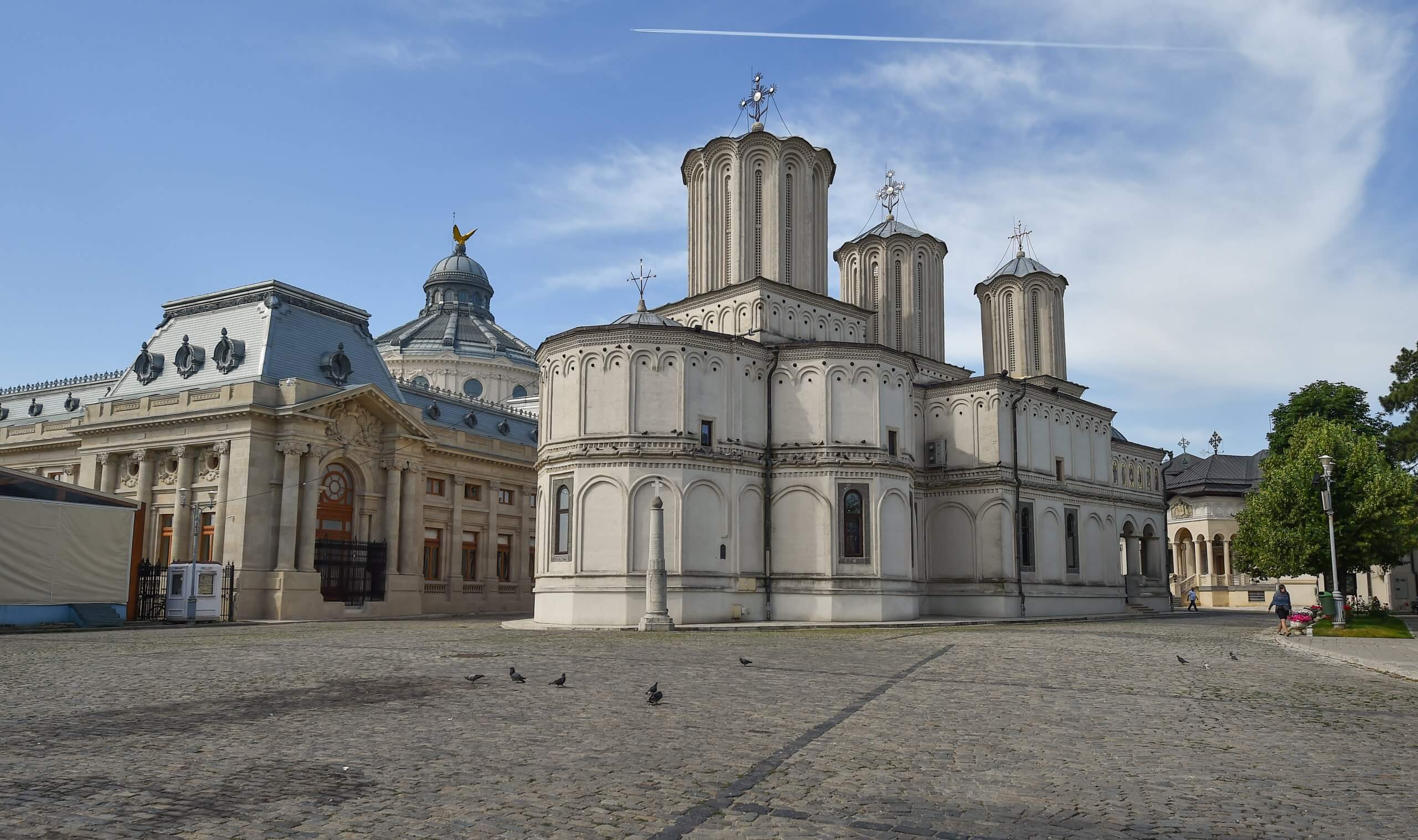
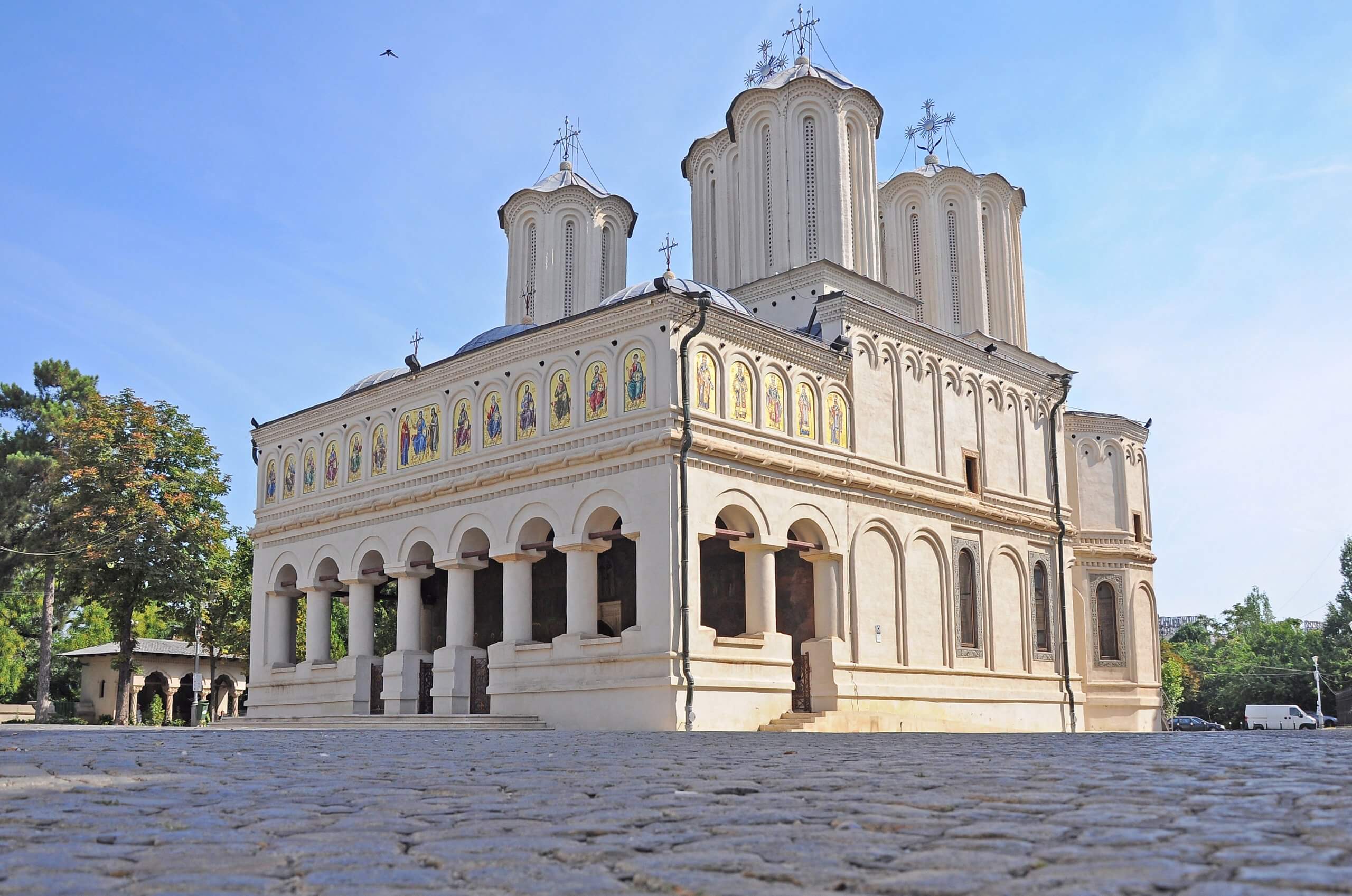
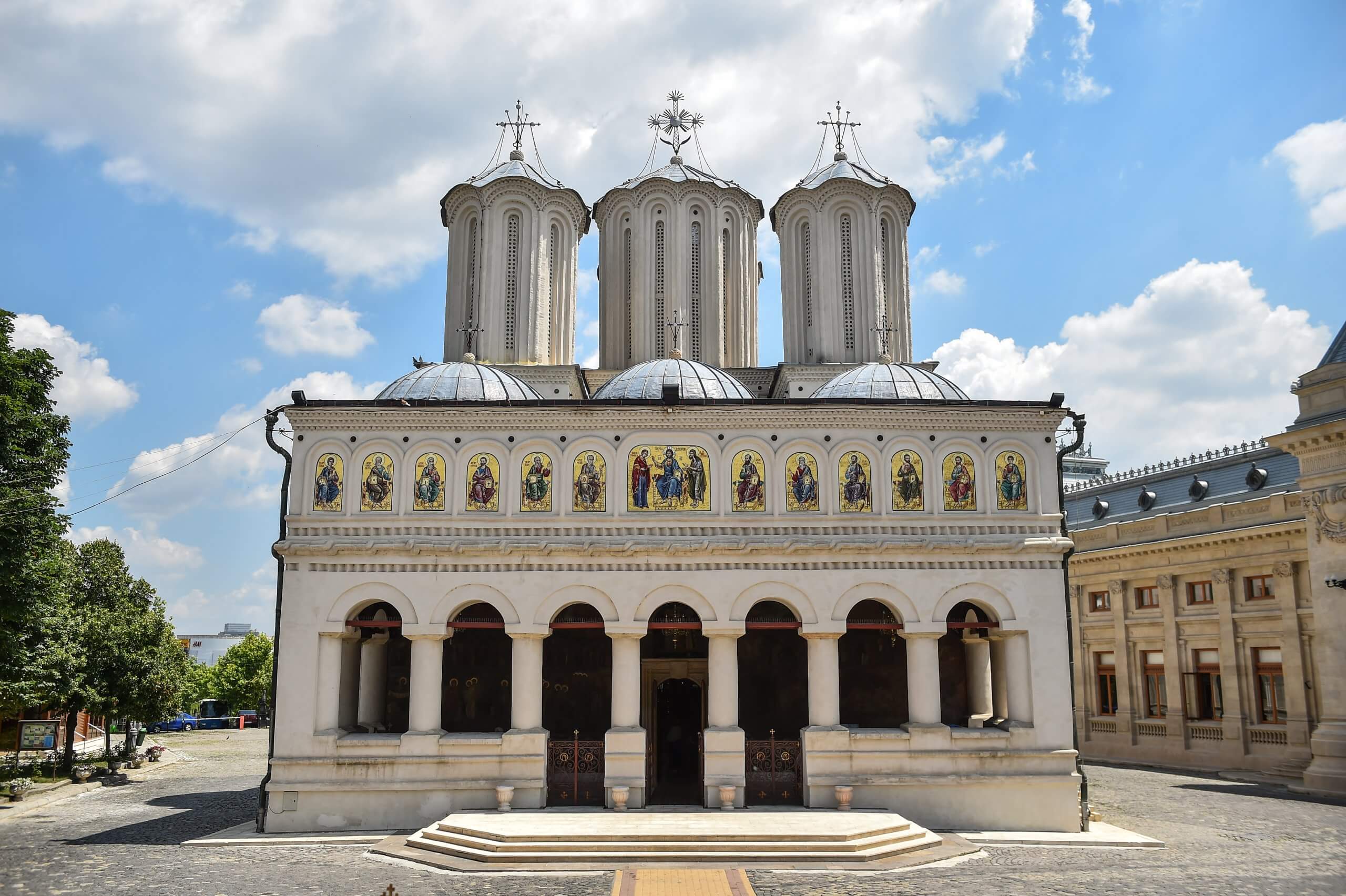
The cathedral regained its original form following restoration work carried out between 1960-1962 on the initiative of Patriarch Justinian Marina. It was built on the architectural model of the church of Curtea de Argeș Monastery, built by Neagoe Basarab. Like the latter, it is composed of an altar and nave, with a trefoiled plan, a raised pronaos supported on octagonal stone columns, with remarkable capitals carved in a composite and polished manner at the top, and four prismatic spires at the elevation.
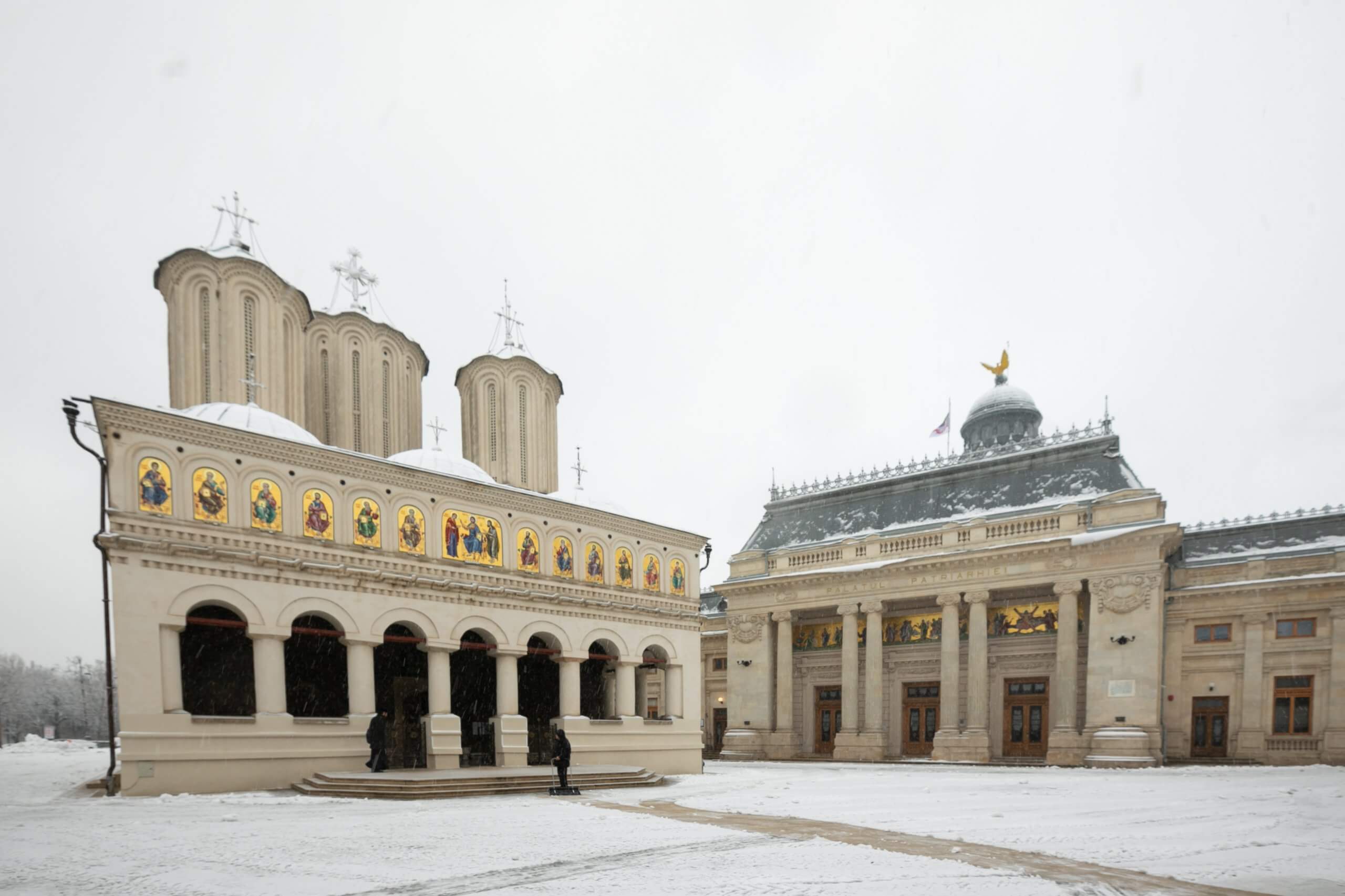
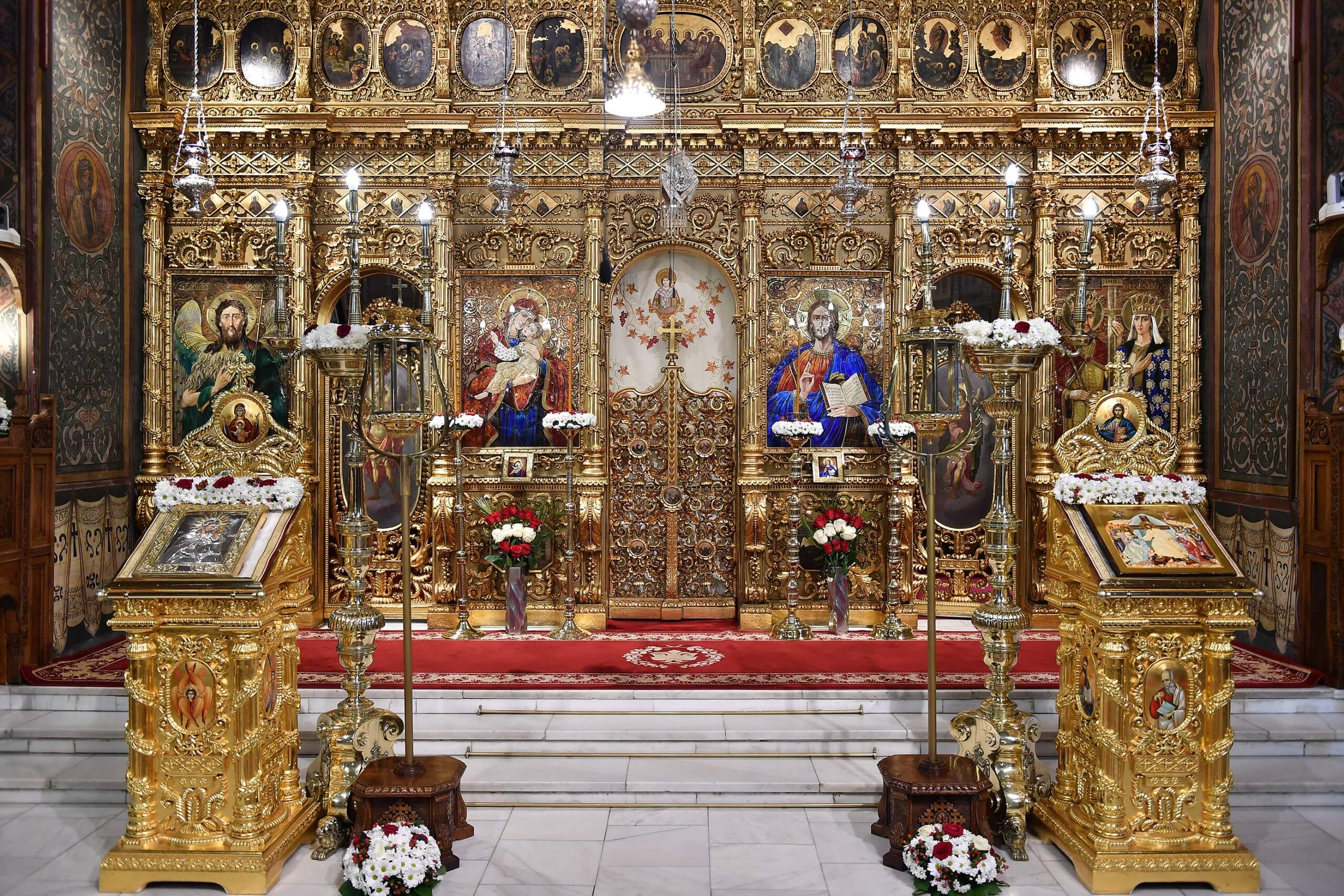
On the outside, the facades of the cathedral are delimited all around in two registers by a quasi-median stone belt. The monument in Bucharest, however, is larger than its model in Curtea de Argeș. In the porch, above the entrance door, is the feast day icon of Holy Sovereigns Constantine and Helen, painted in 1665. The present neo-Byzantine mural was painted by Dimitrie Belizarie between 1932-1935, replacing the neoclassical mural by Nicolae Polcovnicul from 1834-1839 (which was also superimposed on an older layer of painting). The royal icons of the temple were enamelled by Otilia Oteteleșanu between 1961-1964 in the Patriarchal workshops.
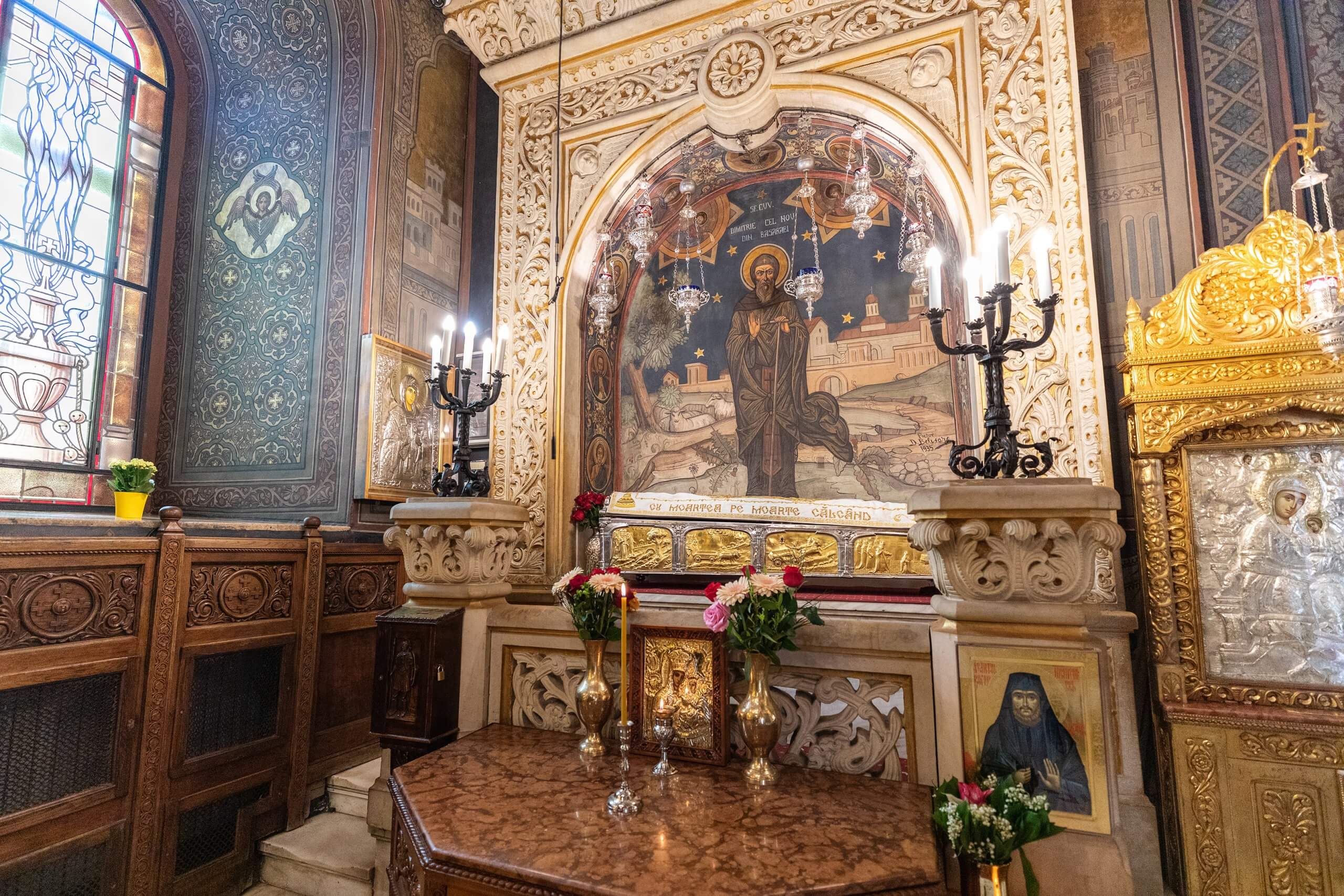
The relics of Saint Dimitrie the New, placed in a beautiful silver reliquary, were brought to the cathedral from the village of Basarabi, on the right bank of the Danube, on 13 July 1774, by Metropolitan Grigorie II (1760-1787). Saint Demetrius the New is the spiritual patron saint of Bucharest, and his feast day, 27 October, is every year the occasion of a great pilgrimage of the faithful from all over the country. To the right of the pronaos are the tombs of the patriarchs of the Romanian Orthodox Church: Miron Cristea († 1939), Nicodim Munteanu († 1948), Justin Moisescu († 1986) and Teoctist Arăpașu († 2007). The tomb of the third patriarch of the Romanian Orthodox Church, Justinian Marina († 1977), is in the ‘Holy Trinity’ church of the Radu Vodă Monastery in Bucharest, the chapel of the Orthodox Theological High School Seminary ‘Metropolitan Nifon’ in Bucharest.
To the east of the cathedral’s altar is the belfry built by the voivode Constantin Brâncoveanu in 1698 and restored in 1956-1958, as well as the round column with inscriptions in memory of the metropolitans Teodosie († 1708) and Ștefan II († 1738), whose tombs were originally located on this site.
To the north of the cathedral, three stone crosses were installed in 1959 in the form of an ensemble called ‘TROIȚA’. The largest of these, from Salatruc-Argeș, dates from the reign of Petru Cercel (1583-1585), while the others date from 1617 and 1644 respectively.
In May-October 2008, under the direct guidance of His Beatitude Patriarch Daniel, new and extensive consolidation and restoration works were carried out at the Patriarchal Cathedral. These works include, first and foremost, the strengthening of the nave and the spires of the church by installing reinforced concrete tie bars. The exterior plaster was also completely redone, using special mortar brought from Italy, the Cathedral’s plinth and pavement were rebuilt, new windows were installed and the church and spires were re-clad with lead sheeting.
Also during the 2008 works, 26 mosaic icons were installed in the upper register of the porch. The painting, the iconostasis and the ornamental furniture were restored. The candles, the large silver chandelier and the stained-glass windows were refurbished and the installations were completely replaced, as well as the audio-video broadcasting equipment for Radio TRINITAS and TRINITAS TV. The belfry also received 4 new bells, moulded at the Grassmayr factory in Austria, and an electromechanical computer-controlled drive system was installed.
At the end of these works, on Sunday, 26 October 2008, on the feast day of St. Martyr Demetrius, the Myrrh-Gusher, it was celebrated the service for the re-consecration of the Patriarchal Cathedral in Bucharest, 350 years after the foundation of this holy place. The re-consecration service was celebrated by His Beatitude Patriarch Daniel, surrounded by a choir including 34 hierarchs members of the Holy Synod of the Romanian Orthodox Church, His Eminence Epiphanius Gattas Hazim, Patriarchal Assistant-Bishop, delegate of Patriarch Ignatius IV of Antioch, priests and deacons.
The Very Rev. Archim. Clement Haralam – Grand Ecclesiarch
The Very Rev. Archim. Andrei Anghel – Patriarchal Assistant
The Very Rev. Archim. Lucian Bujor – Patriarchal Counsellor
The Very Rev. Archim Ioachim Bejenariu – Diocesan Counsellor
Protos. Filaret Irofte – Cathedral clergyman
Protos. Adrian Rogoz – Cathedral clergyman
Protos. Efrem Aichimoaiei – Cathedral clergyman
Protos. Serghie Pîrău – Cathedral clergyman
Archdeac. Maxim Țifui – Cathedral clergyman
Archdeac. Nicolae Iftimiu – Patriarchal Counsellor
Archdeac. Macarie Grigoriu – Cathedral Administrator
Archdeac. Mihail Bucă – Protopsaltes
Archdeac. Constantin Hurjui – Cathedral clergyman
Hierodeac. Roman Bobu – Cathedral clergyman
Deac. Alexandru Copceag – Cathedral clergyman
Deac. Alexandru Cantoriu – Cathedral clergyman
Deac. Tămăslicaru Dumitru Daniel – Cathedral clergyman
Deac. Dimitrie-Cătălin Coșulă – Cathedral clergyman
Daniel Cazan – Cathedral Sacristan
Gabriel Drumea – Cathedral Sacristan
Valentin Cocioceanu – Cathedral Sacristan
Costin Daniel Nicolae – Cathedral Sacristan
Gabriel Bogdan Rădășanu – Cathedral Chanter
Nicolae George Tache – Cathedral Chanter
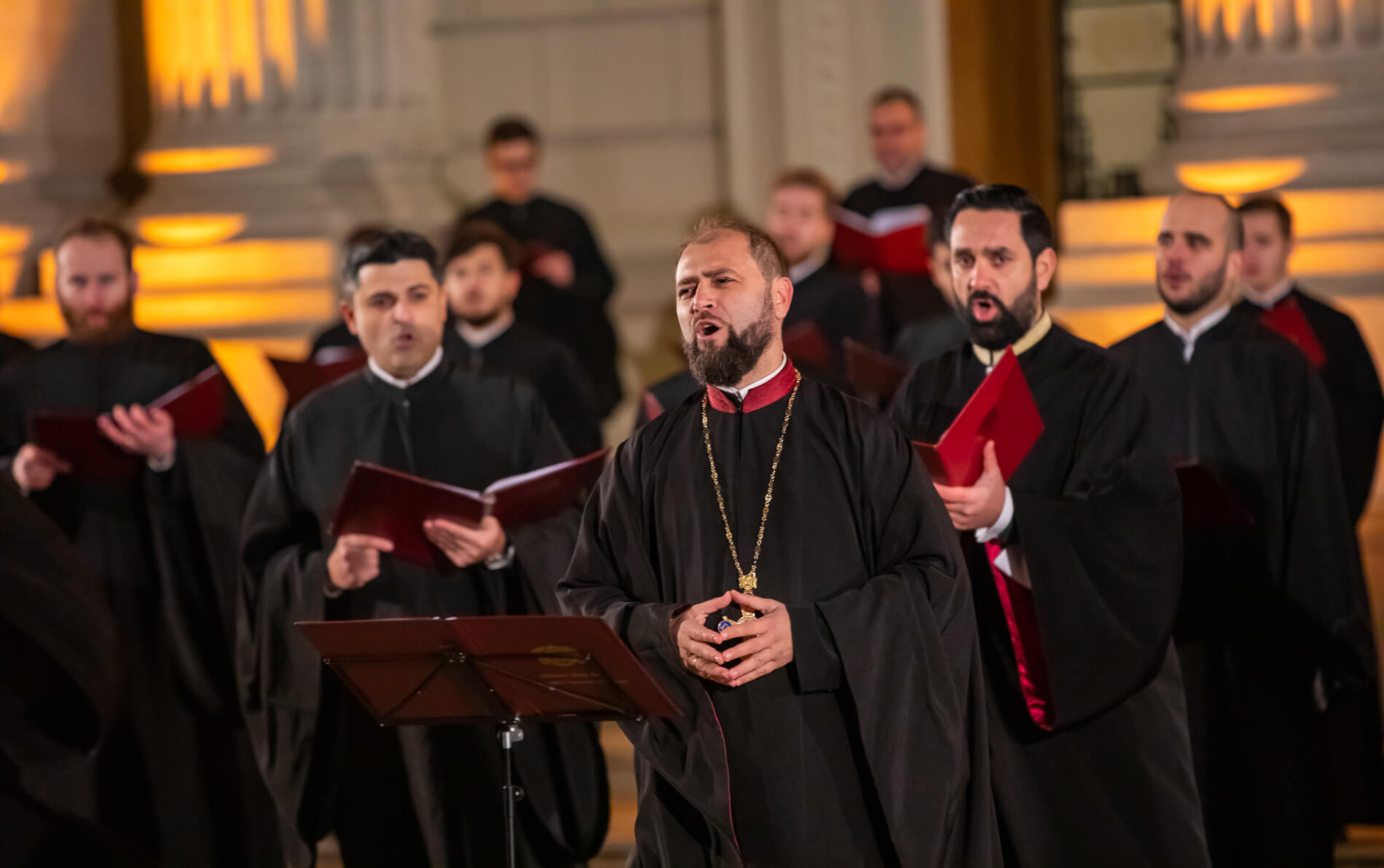
The Tronos Psaltic Group of the Patriarchal Cathedral
It is one of the most famous psaltic groups in our country. The name refers to one of the angelic orders, the “Thrones,” and was offered to it in 2007 by His Beatitude Daniel, Patriarch of the Romanian Orthodox Church. Under the leadership of its conductor and founder, Archdeacon Mihail Bucă, protopsaltes of the Patriarchal Cathedral, the group has performed concerts on many musical stages, as well as in cathedrals and churches in Romania and abroad. Formed in 1997 from the psaltes of the Patriarchal Cathedral in Bucharest – those who initially constituted its core, the group has, over time, attracted priests, deacons, heology students and seminarias, as well as lovers of Byzantine music from other fields.
With an uninterrupted activity of more than 20 years, the Tronos Psaltic Group is one of the most appreciated psaltic groups in Romania. In addition to its liturgical and missionary activity, it is involved in the development and promotion of Byzantine music throughout the country, thanks to the inspiration it has offered to young people and to Byzantine music groups in the country. Of course, this is due to the support of Patriarch Daniel, as well as to the Trinitas Radio and Television stations of the Romanian Patriarchate. Thus, the psaltic group received the Sanctus Stephanus Order from His Beatitude Patriarch Daniel in 2013, while its conductor, Archdeacon Mihail Bucă, received the Order of the Holy Brâncoveanu Martyrs in 2014 and the Order of St. John Chrysostom in 2016, in recognition of his entire missionary activity.
Over the years, the Tronos Psaltic Group has recorded several CDs and a DVD, and has been praised for its distinctive, unique sound—made possible by voices with a penetrating vibrato and a noble singing quality. Moreover, through the collaboration of several members who have shown compositional talent, the first three works of the “Tronos” collection have been published by the Publishing House of the Biblical and Mission Institute of the Romanian Patriarchate, including a beautiful anthology of carols and two services dedicated to the patron saints of the Patriarchal Cathedral.
For the members of the Tronos group, their attention to the accuracy of the interpretation of the musical scores is matched by the love and respect they hold for the message of the liturgical text, showing thus that melody serves the word and prayer.
The Cathedral is open daily from 7:00 a.m. to 8:00 p.m.
Schedule of daily services at the Patriarchal Cathedral
Monday
7:00 a.m. – Midnight Office for Weekdays;
7:45 a.m. – Matins;
9:00 a.m. – Divine Liturgy;
10:30 a.m. – Akathist Hymn to Saint Demetrius the New (officiated in front of the saint’s reliquary, without TV and Radio Trinitas broadcast);
4:00 p.m. – 6:00 p.m. – The Ninth Hour, Vespers, and Paraklesis to Saint Demetrius the New
Tuesday
07:00 – 10:30 – The liturgical program is identical ot hat of Monday;
16:00 – 18:00 – The Ninth Hour, Vespers, and Paraklesis to Saints Constantine and Helen.
Wednesday
07:00 – 10:30 – The liturgical program is identical to that of Monday;
16:00 – 18:00 – The Ninth Hour, Vespers, and Paraklesis to the Prodromitissa Icon of the Mother of God;
6:00 p.m. – 6:30 p.m. – Blessings and other useful prayers (no TV/Radio TRINITAS broadcast).
Thursday
7:00 a.m. – 10:30 a.m. – The liturgical program is identical to that of Monday;
4:00 p.m. – 6:00 p.m. – The Ninth Hour, Vespers, and Paraklesis to Saint Nektarios of Aegina.
Friday
7:00 a.m. – Midnight Office for Weekdays;
7:45 a.m. – Matins;
9:00 a.m. – Divine Liturgy;
10:30 a.m. – The Sacrament of Holy Unction, blessings and other useful prayers (no TV/Radio TRINITAS broadcast);
4:00 p.m. – 6:00 p.m. – The Ninth Hour, Vespers, and Paraklesis to Saint Paraskeva of Jassy.
Saturday
07:00 – Midnight Office for Saturday;
07:45 – Matins;
09:00 – Divine Liturgy;
10:45 – Memorial Service (officiated in the narthex of the Cathedral, without TV/Radio TRINITAS broadcast);
4:00 p.m. – 6:00 p.m. – The Ninth Hour, Vespers with Artoklasia (Litia);
6:00 p.m. – 6:30 p.m. – Akathist Hymn to Jesus Christ the Savior (without TV/Radio TRINITAS broadcast).
Sunday
7:00 a.m. – Midnight Office for Sunday;
07:45 a.m. – Matins with the Canons of the Resurrection;
09:30 a.m. – 12:00 a.m. – Divine Liturgy;
04:00 p.m. – 6:00 p.m. – The Ninth Hour, Vespers and Paraklesis to the Most Holy Mother of God.